My housemate and fellow Animal Behaviour and Welfare student is conducting a survey for her final year project on how the relationship with your dog can affect human health.
Please take 5 minutes of your time to take a look! It would be much appreciated. All responses will be completely anonymous.
Her only requirements are that you are 18+ and have previously/currently own a dog(s).
TAKE SURVEY
Friday, 24 January 2014

Zoo review: Dartmoor Zoological Park
Here it is guys, my first ever zoo review!
Dartmoor Zoological Park, a zoo I have visited a couple of times whilst being at uni in Plymouth, is a 33 acre zoo situated in the Southwest of England. Many of you may have heard of Dartmoor Zoo with it being the subject of the Hollywood movie and book We bought a Zoo that tells the story of Benjamin Mee and his family who bought the zoo in August 2006 and undertook the epic task of refurbishing the site.
Also the winner of the Eden's Channel Top Wildlife Attraction of the year 2011, Dartmoor Zoo has beautiful views and a wide variety of animals including the widest variety of big cats in the southwest! Other animals that can be seen at the zoo include; Bears, wolves, tapir, racoons, meerkats, monkeys and so many more!
Being an animal lover I have been visiting zoos all of my life but, when I first visited Dartmoor Zoo in my first year of University, I was surprised to see that it was unlike any other zoo I'd visited before. Usually large and unrealistically clean, it is easy to see that most zoos' priorities lay with the members of the public that visit them. Dartmoor zoo, being noticeably smaller than other zoos, is situated in woodland and does not appear to have been as commercialized as the other attractions I have visited. Now this may sound like a negative point but I admire the fact that, in this zoo, the animals seem to come first. The enclosures are much more natural looking than in other zoos I have visited and they provide a much more up-close-and-personal experience for visitors. They even offer the chance for some fantastic, unobstructed, wildlife photography.
The zoo has an award winning educational team that provide an excellent Close Encounters experience where visitors can meet some of the really interesting animals such as stick insects, snakes, tortoises and many more!
The zoo also run some fantastic experience days with their Big Cat Keeper for a day being an absolute favourite.
In my experience the keepers and other members of staff are all very friendly and happy to chat, and you can often see them about the zoo, something else I have never really seen at other zoos.
Even Benjamin Mee himself can be seen walking about the zoo, giving the visitors a warm, at-home, feel about their visit. I bet you've never seen the owner of any of the other zoos you've visited?
For those of you that haven't visited Dartmoor Zoo, I strongly suggest that you visit whenever you get the opportunity!
For me, Dartmoor captures exactly what a zoo should be all about and a lot of much larger, more popular attractions, could learn a few things from them!
You can also DONATE here to help save Dartmoor Zoo. Being so small, they rely a lot on their visitors to keep the zoo open so please help if you can!
Dartmoor Zoological Park, a zoo I have visited a couple of times whilst being at uni in Plymouth, is a 33 acre zoo situated in the Southwest of England. Many of you may have heard of Dartmoor Zoo with it being the subject of the Hollywood movie and book We bought a Zoo that tells the story of Benjamin Mee and his family who bought the zoo in August 2006 and undertook the epic task of refurbishing the site.
Also the winner of the Eden's Channel Top Wildlife Attraction of the year 2011, Dartmoor Zoo has beautiful views and a wide variety of animals including the widest variety of big cats in the southwest! Other animals that can be seen at the zoo include; Bears, wolves, tapir, racoons, meerkats, monkeys and so many more!
 |
| One of Dartmoor's Tapir that I had the pleasure of meeting on one of my visits. |
The zoo has an award winning educational team that provide an excellent Close Encounters experience where visitors can meet some of the really interesting animals such as stick insects, snakes, tortoises and many more!
The zoo also run some fantastic experience days with their Big Cat Keeper for a day being an absolute favourite.
In my experience the keepers and other members of staff are all very friendly and happy to chat, and you can often see them about the zoo, something else I have never really seen at other zoos.
Even Benjamin Mee himself can be seen walking about the zoo, giving the visitors a warm, at-home, feel about their visit. I bet you've never seen the owner of any of the other zoos you've visited?
 |
| Myself and some of my Uni course mates with Benjamin Mee on one of our trips to Dartmoor Zoo. |
For me, Dartmoor captures exactly what a zoo should be all about and a lot of much larger, more popular attractions, could learn a few things from them!
You can also DONATE here to help save Dartmoor Zoo. Being so small, they rely a lot on their visitors to keep the zoo open so please help if you can!
Monday, 20 January 2014
Happy Penguin awareness day!!
I'm back!!
I know, I know, it's been a whole month since I last posted but I've been extremely busy with my uni work and Christmas etc etc.
Never mind, I'm back now and what a better way to start 2014 than with Penguin Awareness Day!

Now don't lie and tell me you haven't watched Happy Feet and that you didn't fall totally head over heels with that hip-hoppity little fella...but what about real penguins? I'm sure a lot of you love them but how much do you really know about those tuxedo wearing guys?
Well, there are approximately 18 species of Penguin worldwide and sadly 13 of those species are considered at risk. Some species only have a few thousand individuals left and that may sound like a lot but it's really, really not.
When you think about Penguins, I bet your first thoughts are cold, snow, the Antarctic...but Penguins are actually found in many other places around the world. Species can be found in really hot places too! Places like Australia, New Zealand and South Africa all have species of Penguins living there. They can also be found as far north as the Galapagos Islands.
It's no surprise that Penguins becoming endangered was largely down to us humans. Man-made pollution, oil spills, habitat destruction and exploitation of food sources are some of the reasons that Penguins have become endangered but, to my surprise, deforestation is also one of the things causing problems for Penguins!
Other problems such as climate change are also part of the problem. With the ice-caps melting, the poor Penguins habitats are slowly but surely disappearing.
How can we help? I hear you ask!
Well there are many ways in which you can help save the Penguins and I have gathered a few for you here to help you on your way.
Adopt a Pengiun with the WWF - Through the WWF you can adopt a Penguin and your money can help with the following:
- Managing resources and safeguarding Antarctica's wildlife
- Establish protected areas in the Southern Ocean
- Reduce illegal and unsustainable fishing practices
and much more!
For £3, £5 or £10 a month (or whatever you can afford) you will receive an adoption pack with a cuddly toy, bookmark, stickers, a certificate and loads more cool stuff!
You can also donate to other organisations that help penguins -
- Defenders of Wildlife
- Yellow-Eyed Penguin Trust
- Oceana
- Penguin Foundation
- Sanccob
Keep the oceans clean -
You can help keep the oceans clean by recycling, cleaning up beaches when you visit, buying organic foods that reduce the use of fertilisers and pesticides and disposing of chemicals correctly! You can read more about how to keep the oceans clean here.
Only eat fish that has been sustainably caught -
Penguins are huge fans of sardines, krill, anchovies and other small fish that us humans also like to eat. The over-fishing of these small fish is using up the Penguins food supplies and without them they cannot survive!
There are many other ways in which you can help save the Penguins. As with all conservation effort, education is key! So why not have a little read up about the different species of Penguin and the other ways that you can help save them from becoming extinct!
I know, I know, it's been a whole month since I last posted but I've been extremely busy with my uni work and Christmas etc etc.
Never mind, I'm back now and what a better way to start 2014 than with Penguin Awareness Day!
Now don't lie and tell me you haven't watched Happy Feet and that you didn't fall totally head over heels with that hip-hoppity little fella...but what about real penguins? I'm sure a lot of you love them but how much do you really know about those tuxedo wearing guys?
Well, there are approximately 18 species of Penguin worldwide and sadly 13 of those species are considered at risk. Some species only have a few thousand individuals left and that may sound like a lot but it's really, really not.
When you think about Penguins, I bet your first thoughts are cold, snow, the Antarctic...but Penguins are actually found in many other places around the world. Species can be found in really hot places too! Places like Australia, New Zealand and South Africa all have species of Penguins living there. They can also be found as far north as the Galapagos Islands.
It's no surprise that Penguins becoming endangered was largely down to us humans. Man-made pollution, oil spills, habitat destruction and exploitation of food sources are some of the reasons that Penguins have become endangered but, to my surprise, deforestation is also one of the things causing problems for Penguins!
Other problems such as climate change are also part of the problem. With the ice-caps melting, the poor Penguins habitats are slowly but surely disappearing.
 |
| Photo Credit: Atmos News. |
Well there are many ways in which you can help save the Penguins and I have gathered a few for you here to help you on your way.
Adopt a Pengiun with the WWF - Through the WWF you can adopt a Penguin and your money can help with the following:
- Managing resources and safeguarding Antarctica's wildlife
- Establish protected areas in the Southern Ocean
- Reduce illegal and unsustainable fishing practices
and much more!
For £3, £5 or £10 a month (or whatever you can afford) you will receive an adoption pack with a cuddly toy, bookmark, stickers, a certificate and loads more cool stuff!
You can also donate to other organisations that help penguins -
- Defenders of Wildlife
- Yellow-Eyed Penguin Trust
- Oceana
- Penguin Foundation
- Sanccob
Keep the oceans clean -
You can help keep the oceans clean by recycling, cleaning up beaches when you visit, buying organic foods that reduce the use of fertilisers and pesticides and disposing of chemicals correctly! You can read more about how to keep the oceans clean here.
Only eat fish that has been sustainably caught -
Penguins are huge fans of sardines, krill, anchovies and other small fish that us humans also like to eat. The over-fishing of these small fish is using up the Penguins food supplies and without them they cannot survive!
There are many other ways in which you can help save the Penguins. As with all conservation effort, education is key! So why not have a little read up about the different species of Penguin and the other ways that you can help save them from becoming extinct!
Friday, 20 December 2013
Shark cull plans for Western Australia

I came across this story in the Nature journal today and the mere thought of it disgusted me.
The Western Australian Government have recently announced a $6.85 million plan to cull sharks that come too close to the shore in order to reduce attacks on humans. $2 million is set to be allocated to the tracking and destroying of the sharks, with a further $2 million being allocated to the setting of traps to kill any sharks that come too close to the shore.
The plan, which is set to be put in place in January 2014, will include setting drum lines - a line of baited hooks - a kilometer offshore aiming to kill any sharks that come too close to the shore. It will also arrange 'management zones' around some of Western Australia's most popular beaches in which any shark that enters the area will be killed.
This plan is supposed to reduce attacks on humans that take to the water for recreation however is likely to severely damage population numbers of the species being hunted.
The three species most commonly known to attack humans are the infamous Great White, the Tiger Shark and the Bull shark; all three being listed as threatened by the IUCN with the Great White being listed as vulnerable to extinction.
George Burgess, a shark researcher from the Florida Museum of Natural History, rightly states that "If they take enough sharks out of the water, sure it’s going to reduce shark attacks", but how many will need to be killed before a difference can be seen?
Currently the average number of shark attacks per year in Australia is 15, with a study from 2011 showing that fatalities were as low as 1.1 per year on average over the past 20 years.
Some may say that these numbers are too high, however I think people need to remember that the ocean is their habitat - not ours.
Not only will this cull damage shark population numbers, it may also have a hugely detrimental effect on the marine ecosystems that they survive in and may also be dangerous to other species, such as Dolphins, that are common in those areas.
I was shocked to hear that three shark control programs are currently in place worldwide; two in Australia (in Queensland and New South Wales) and the other in KwaZulu-Natal in South Africa. However, with this region of Western Australia thought to be a migration route for Great Whites, the plans for this new 'control' program has caused uproar once again.
Besides being environmentally irresponsible and totally archaic behaviour, this new plan also goes against current legislation that protects Great Whites in Commonwealth and WA waters.
I urge all of you reading this to go and SIGN this petition to try and stop this plan going ahead. It appears that humans need reminding that they do not own this world, and that every species has as much right to live on this earth as we do. Humans are not marine animals and we should not alter such a delicate environment to suit our needs.
Tuesday, 17 December 2013
New species of Tapir discovered!
Exciting news has been revealed this week regarding the discovery of a new species of Tapir in Brazil and Colombia! Published by the Journal of Mammology, scientists say that this is the biggest zoological discovery of the 21st century and the first species of Tapir discovered since 1865.
The newly discovered species, Tapirus kabomani, has apparently been known to the indigenous tribes of South America for many years and, although reports were made of this "different kind" of Tapir, scientists disregarded the information saying that the indigenous people must have been wrong.
The Kabomani tapir, named so after the Paumari word for tapir, is closely related to the Brazilian tapir however genetic research suggests that the the two species separated from one another around 300,000 years ago. The Kabomani tapir is much smaller than any other tapir and sports much darker hair. Being the smallest of the five species, conservationists are likely to name this new species the Pygmy or Dwarf tapir.
Tapirs first appeared around 50 million years ago in North America and eventually migrated to Asia, South America and even Europe. Unfortunately many species died out leaving us with the five species known today; four found in Central and South America and one in Asia. All five are listed as threatened with extinction due to over-hunting and human pressures on their environments such as habitat destruction.
As megafauna, their existence is highly important for the maintenance of the ecosystems in which they live and they also play an important role in many indigenous tribes, both as food and in mythologies. Sadly, due their scarce numbers, the Kabomani tapir is likely to become more threatened than the other species. The area in which they are found, in the southwest Amazon, is also facing huge road-building projects and increasing rates of deforestation therefore further threatening them.
It is now down to conservationists to confirm their numbers and distributional range and put in place efforts to ensure their conservation status is managed effectively.
The newly discovered species, Tapirus kabomani, has apparently been known to the indigenous tribes of South America for many years and, although reports were made of this "different kind" of Tapir, scientists disregarded the information saying that the indigenous people must have been wrong.
The Kabomani tapir, named so after the Paumari word for tapir, is closely related to the Brazilian tapir however genetic research suggests that the the two species separated from one another around 300,000 years ago. The Kabomani tapir is much smaller than any other tapir and sports much darker hair. Being the smallest of the five species, conservationists are likely to name this new species the Pygmy or Dwarf tapir.
 |
| Photo credit: Fabrico R. Santos - A female (left) and male (right) Kabomani tapir caught on a camera trap. |
As megafauna, their existence is highly important for the maintenance of the ecosystems in which they live and they also play an important role in many indigenous tribes, both as food and in mythologies. Sadly, due their scarce numbers, the Kabomani tapir is likely to become more threatened than the other species. The area in which they are found, in the southwest Amazon, is also facing huge road-building projects and increasing rates of deforestation therefore further threatening them.
It is now down to conservationists to confirm their numbers and distributional range and put in place efforts to ensure their conservation status is managed effectively.
Friday, 6 December 2013
Adopt an animal this Christmas!
So December is here at last and, with Christmas just 19 days away, the rush to buy everyone their presents has begun.
If you're still struggling for ideas then this might be just the post for you! Why not adopt an animal for someone this Christmas and help save an endangered species whilst providing an awesome gift for someone you love!
There are many ways you can go about adopting an animal and some people may not even know where to start, so this is where I help!
Here are just a few animals you could adopt for someone this Christmas:
Adopt Polar Bear through the WWF and receive a cuddly Polar Bear toy, a magazine three times a year with updates about your Polar Bear, a fact book, stickers and much more! You can choose a monthly payment of £3, £5, £10 or as much as you want. Your donation will help protect the habitat of the Polar Bears and help keep them alive! Read more about what your donation will do here or have a look at some other animals you could adopt!

Adopt a Donkey from The Donkey Sanctuary! Choose your local sanctuary; Birmingham, Belfast, Ivybridge, Sidmouth, Leeds or Manchester and adopt a Donkey for someone this Christmas. At just 7 pence per day your donation will help keep your new friend safe and happy. After adopting, you will receive a framed photo of your donkey, along with updates, a membership card and certificate! You can read more about adopting a Donkey here!

Adopt a Tiger from Born Free for just £2.50 a month and help fund conservation efforts for this incredible endangered species. You will receive a cuddly toy, adoption pack, magazine, stickers and so much more! Through Born Free you can also adopt an:
If you're still struggling for ideas then this might be just the post for you! Why not adopt an animal for someone this Christmas and help save an endangered species whilst providing an awesome gift for someone you love!
There are many ways you can go about adopting an animal and some people may not even know where to start, so this is where I help!
Here are just a few animals you could adopt for someone this Christmas:
 |

Adopt a Donkey from The Donkey Sanctuary! Choose your local sanctuary; Birmingham, Belfast, Ivybridge, Sidmouth, Leeds or Manchester and adopt a Donkey for someone this Christmas. At just 7 pence per day your donation will help keep your new friend safe and happy. After adopting, you will receive a framed photo of your donkey, along with updates, a membership card and certificate! You can read more about adopting a Donkey here!

- Elephant
- Giraffe
- Big Cats
- Hippo
- Gorilla and many more!
Sunday, 1 December 2013
Virunga National Park threatened by British oil company!
Virunga National Park, situated on the eastern border of the Democratic Republic of Congo, is the oldest national park in Africa and consists of 7800km squared of savanna, lava plains, swamps, erosion valleys, forests, active volcanoes and the ice fields of the Rwenzori mountains. The park is home to many species including 200 mountain Gorillas that are critically endangered with as little as 880 individuals existing worldwide.
The park is a World Heritage site and a Ramsar wetland of international importance but this appears to be of little importance to British oil company Soco International PLC who are pursuing approval to carry out exploration and oil extraction in the park.
Such activities are illegal in this protected area of the Democratic Republic of Congo and may be extremely damaging to the ecosystems that exist there. According to WWF, significant oil exploitation may consist of; disruptive seismic tests, deforestation, deep underground drilling and the laying of oil pipelines. The increase of human presence may also be detrimental to the animals residing in the park.
The park is thought to contain more individual species than almost anywhere else in the world and, with the planned areas for exploration covering up to 85% of the land there, endangered animals such as chimps, hippos, okapi and forest elephants are in danger of having their habitats destroyed. There are over 200 species of mammal living in the park and over 700 types of bird.
Even the British government have made it clear that they strongly oppose the oil extraction but the London-based company are still moving forward with their proposal.
You can help stop the go-ahead of this by signing this petition NOW!

Sunday, 24 November 2013
Lion hunt photo causes outrage on twitter!
This week, big game hunter and Outdoor Channel TV personality, Melissa Bachman caused outrage on social networking site Twitter after posting a photo of herself posing with a Lion she had shot earlier that day.
The photo was followed by the following tweet that caused unbelievable controversy and countless negative comments in response.
 Even world famous comedian Ricky Gervais had something to say on the matter and tweeted "Spot the typo" in reference to the word "hunt" in Bachmans tweet, one can only assume.
Furthermore, shocked opponents of Lion hunting launched a petition on Change.org, in order to try and convince the South African government to deny future entry to the Minnesota-based hunter, which closed with 487,315 signatures.
Is it legal?
To some peoples surprise, big game hunting IS actually legal in South Africa and preserves exist to facilitate such controlled hunts. In this instance, the Maroi Conservancy was responsible for facilitating the hunt and has stated on their facebook page that their motto is "conservation through sustainable hunting" and that meat from the animals shot on their site is distributed locally to communities. They also stated that the funds raised through hunting are used to put up fences and guard against poachers.
Although the Maroi Conservancy has no Lions, they hooked the professional hunter up with another hunting outfitter that had Lions on their land.
It was stated that Bachman had all the necessary government permits and that the Lion was not drugged or enclosed prior to its shooting.
Why is it still legal?
Not to be bias, although I'm sure you can all guess where I stand on this matter, it has been estimated that each hunt can raise up to $125,000 and conservation needs more money than ever. Between 2008 and 2011 Tanzania generated £75 million through controlled hunting and, without such revenue, 11 out of their 15 wilderness areas would not be able to continue operating.
Melissa Simpson, director of science-based wildlife conservation for The Safari Club International Foundation, says "As with the regulated hunters in the United States, the regulated hunters in Africa make a vital contribution to conservation efforts, primarily through the revenues their hunting expeditions generate for local communities and wildlife resource agencies,".
What will happen to Lions if they continue to be hunted?
Many argue that these "trophy" hunts are unsustainable and cause unnecessary pressures on wild populations. Large male Lions are often the favourite targets which could have detrimental evolutionary impacts by killing out the healthiest genes. It may also cause further deaths, as other males may fight to the death for the dominant position in a pride and may then kill any cubs that were the offspring of the previous male.
An anonymous source for National Geographic has, however, stated that all Lion hunting in South Africa is carried out on private reserves where individuals are bred specifically for hunting. Therefore, Bachmans Lion was most definitely not a breeding member of a wild population therefore their conservation status would not be affected.
That said, many agree that every Lion is precious and should be treated so. Each year around 600 Lions are killed through hunting and although this does not affect wild populations it is, at the end of the day, morally wrong.
 |
| Photo credit: National Geographic |

Furthermore, shocked opponents of Lion hunting launched a petition on Change.org, in order to try and convince the South African government to deny future entry to the Minnesota-based hunter, which closed with 487,315 signatures.
Is it legal?
To some peoples surprise, big game hunting IS actually legal in South Africa and preserves exist to facilitate such controlled hunts. In this instance, the Maroi Conservancy was responsible for facilitating the hunt and has stated on their facebook page that their motto is "conservation through sustainable hunting" and that meat from the animals shot on their site is distributed locally to communities. They also stated that the funds raised through hunting are used to put up fences and guard against poachers.
Although the Maroi Conservancy has no Lions, they hooked the professional hunter up with another hunting outfitter that had Lions on their land.
It was stated that Bachman had all the necessary government permits and that the Lion was not drugged or enclosed prior to its shooting.
Why is it still legal?
Not to be bias, although I'm sure you can all guess where I stand on this matter, it has been estimated that each hunt can raise up to $125,000 and conservation needs more money than ever. Between 2008 and 2011 Tanzania generated £75 million through controlled hunting and, without such revenue, 11 out of their 15 wilderness areas would not be able to continue operating.
Melissa Simpson, director of science-based wildlife conservation for The Safari Club International Foundation, says "As with the regulated hunters in the United States, the regulated hunters in Africa make a vital contribution to conservation efforts, primarily through the revenues their hunting expeditions generate for local communities and wildlife resource agencies,".
What will happen to Lions if they continue to be hunted?
Many argue that these "trophy" hunts are unsustainable and cause unnecessary pressures on wild populations. Large male Lions are often the favourite targets which could have detrimental evolutionary impacts by killing out the healthiest genes. It may also cause further deaths, as other males may fight to the death for the dominant position in a pride and may then kill any cubs that were the offspring of the previous male.
An anonymous source for National Geographic has, however, stated that all Lion hunting in South Africa is carried out on private reserves where individuals are bred specifically for hunting. Therefore, Bachmans Lion was most definitely not a breeding member of a wild population therefore their conservation status would not be affected.
That said, many agree that every Lion is precious and should be treated so. Each year around 600 Lions are killed through hunting and although this does not affect wild populations it is, at the end of the day, morally wrong.
Tuesday, 19 November 2013
Two faced cat beats all odds!
Now I know that this isn't exactly breaking news and some of you may have heard this story before, but I have only just come across this incredible animal and felt it was definitely worthy of a spot on Animal News.
For those of you who don't know, this is the story of Frankie and Louis the two faced cat who has beaten all odds and survived until the ripe old age of 13!
Frankie and Louis are what is known as a Janus Cat - Janus being the Roman God who had two faces - meaning he (they?) were born with two faces, two mouths, two noses and three eyes.
Similar deformities are often seen in conjoined twins but this cat is not the result of an incomplete separation of two embryos. The scientific term for this is Disprosopus, or cranial duplication, and is the result of an increase of the protein Sonic Hedgehog homolus (yes...sonic hedgehog is a REAL protein) during embryonic development.
Animals with this condition usually suffer multiple ailments, such as cleft pallet, which usually cause the animals to die before or soon after they are born.
Miraculously, Frankie and Louis did not suffer any of these ailments and have beaten all the odds by living to see 13!
At just a day old their original owner brought them into the vets to be euthanased but Marty Stevens, who worked at the veterinary surgery at the time, rescued the kitten and took him (them?) in.
For the first three months of their life Marty used feeding tubes to make sure they didn't choke but it turns out that Frankie and Louis only use one mouth to eat. They can also only see out of their two outer eyes, the middle one can't even blink!
Now 13, Frankie and Louis have earned themselves a spot in the Guinness World Records as the longest living Janus animal!
For those of you who don't know, this is the story of Frankie and Louis the two faced cat who has beaten all odds and survived until the ripe old age of 13!
Frankie and Louis are what is known as a Janus Cat - Janus being the Roman God who had two faces - meaning he (they?) were born with two faces, two mouths, two noses and three eyes.
 |
| Photo Credit: Steven Senne, Associated Press. |
Animals with this condition usually suffer multiple ailments, such as cleft pallet, which usually cause the animals to die before or soon after they are born.
Miraculously, Frankie and Louis did not suffer any of these ailments and have beaten all the odds by living to see 13!
At just a day old their original owner brought them into the vets to be euthanased but Marty Stevens, who worked at the veterinary surgery at the time, rescued the kitten and took him (them?) in.
For the first three months of their life Marty used feeding tubes to make sure they didn't choke but it turns out that Frankie and Louis only use one mouth to eat. They can also only see out of their two outer eyes, the middle one can't even blink!
Now 13, Frankie and Louis have earned themselves a spot in the Guinness World Records as the longest living Janus animal!
Meet Frankie and Louis
Sunday, 17 November 2013
Charity Skydive for Wild Futures!
In March 2014 a friend of mine, Richard Cook, is taking part in a charity skydive to help raise money for Wild Futures.
Dressed as a monkey, he will be jumping out of a plane and hoping to raise £400 for this UK based charity that work to protect and conserve primates and their habitats worldwide. The charity have been around for 50 years and have done some outstanding work during that time.
Their flagship project, The Monkey Sanctuary in Cornwall, is internationally known for their care of primates and incredible enclosure designs. It is open to the public for seven months of the year and aims to help educate people about their conservation efforts.
Please donate as much or as little as you possibly can for this amazing cause and then SHARE THIS PAGE with all your friends and family! Without public donations charities like this would simply not exist and their fantastic work would be impossible.
 |
| Richard and a monkey friend at Apenhaul Primate Park. |
Their flagship project, The Monkey Sanctuary in Cornwall, is internationally known for their care of primates and incredible enclosure designs. It is open to the public for seven months of the year and aims to help educate people about their conservation efforts.
Please donate as much or as little as you possibly can for this amazing cause and then SHARE THIS PAGE with all your friends and family! Without public donations charities like this would simply not exist and their fantastic work would be impossible.
Global warming threatens Canada Lynx kittens.
The
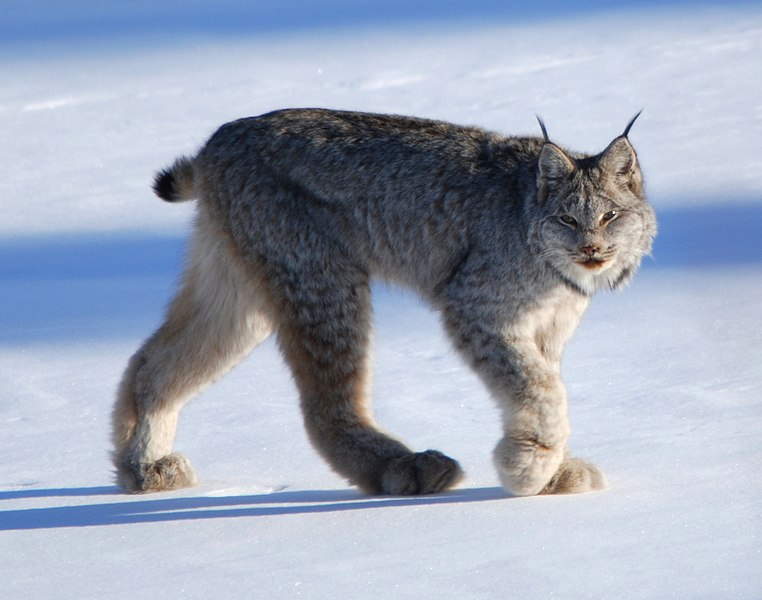
Canada lynx, often known as the Ghosts of the North, can be found thriving in the dense forests of Canada down to some of the northern states of the USA such as Maine, Montana, Washington, Oregon and Wyoming.
Smaller populations are known to be living in other states, however in the year
2000 they were officially listed as a threatened species by the U.S. Fish and Wildlife Service due to poaching for fur.
Not to be
confused with the similar looking Bobcat, these leggy felines are perfectly
adapted for the snowy habitats in which they live, with their giant paws giving
them the perfect advantage over other predators (Bobcats and Coyotes) when it comes to hunting the
snowshoe hare that makes up the majority of their diet. They also have
noticeable ear tufts that aid in hearing and are typically grey in colour
compared to the spotted coat of the Bobcat.
 |
| Photo credit: kdee64 (Keith Williams) on Flickr |
Lynx
kittens usually spend the first five weeks of their lives in a cosy den that
the mother scopes out before she gives birth. They then follow her every move
in order to learn the vital hunting skills they will need to survive by
themselves. By 7-9 months of age they are able to hunt by themselves and are
almost ready to leave home. Lynx are usually solitary animals but have been known to travel in small groups at times.
The habitats where these Lynx are found
are known to have up to 2.7m of snowfall annually and this is just how the
Canada Lynx likes it. However, the inevitable climate change is already
decreasing snow fall and destroying the habitats that these cats depend on for
survival.
New
kittens may have a struggle on their hands (or
paws) as this species is particularly sensitive to climate change. They
rely so much on their physical adaptations to give them an advantage when
hunting that, without the snowy landscapes, their physical attributes will be
useless.
This may
lead to less successful hunting and may cause the species to suffer further.
Friday, 15 November 2013
New fossil find reveals big cat origins.
The big
cats, such as lions, tigers and leopards, are among some of the most
successful predators on the planet, but when and where did they first arrive on
earth?
Well a
new fossil find may just give us the answer that has been long sought after!
Before
now, the oldest big cat fossil was found on the continent of Africa and
suggested that big cats were around 3.8 million years old. However, DNA
comparisons have lead scientists to believe that big cats are in fact as old as
6 million years old...and now they have the bones to prove it.
Whilst
carrying out their usual research and scoping out possible new digging sites
on the Tibetan Plateau in Asia, Jack Tseng and his colleagues came across a discovery
that is set to change scientific history. They discovered the skull of an
ancient big cat - Panthera blytheae.
Usually
digging up the bones of the native hoofed animals and the occasional rhino,
this discovery brought excitement to the team as they carefully removed the
remains from the fossil-rich ground.
 |
| Photo Credit: Gary Takeuchi |
After
further examination back in the Los Angeles lab, the scientists discovered that
the animal they had dug up was in fact the ancient sister to the modern snow
leopard. They had expected the remains to belong to the common ancestor of all
living felids but bone comparisons put the animal distinctly on the snow
leopard line.
Big cats
were originally native to all continents except Australia and Antarctica and
moved freely across continents when land bridges occurred due to a drop in sea
levels. When these land bridges
disappeared, populations were isolated and eventually adapted and evolved to
survive in their new environments. These adaptations eventually meant that
original populations could no longer breed, giving rise to new species. This is
how the big cat species that we know today would have come about and how they
ended up in their current homes.
This
discovery of the P. Blytheae skull,
along with the remains of other species found nearby, help to paint a clear
image of what the environment was like when these animals roamed the Tibetan
Plateau and how they adapted and survived in the constant cold climates of that
time.
Although
this discovery was extremely exciting, it is not the end of the big cat story.
As it was the sister of a modern snow leopard, it is clearly not the oldest
fossil of its kind. Fossils still remain out there of the first ever common
ancestors of the felines.
Scientists
say that the more that is known about the success of ancient big cats under
different environmental conditions, the easier it will be to predict their
success to future changes.
Tseng
says "studying these origins isn't just a sentimental things, in some ways
it's a survival thing".
Thursday, 14 November 2013
5 Reasons why sharks are in trouble!
 |
| Photo Credit: National Wildlife Federation |
There are 5 main reasons why Sharks are in trouble today, and all of them are man-related.
- Commercial Shark fishing - Fishing for Sharks has been around for decades and in the past 60 years has depleted populations drastically. Shark fishing occurs worldwide and they are hunted for their fins, liver oil, cartilage and meat.
- Shark bycatch - Bycatch is when sharks are accidentally caught in commercial fishing nets. Unfortunately they are then often killed. This is usually unreported and illegally carried out, causing a decrease in shark numbers over the years.
- Consumer demand - Worldwide shark fins are in high demand, especially in Asia where they are used for the delicacy Shark Fin Soup. Over the years this industry has increased in value from $400 to $500 million a year.
- Lack of regulation - Unfortunately these species are not as protected as they need to be, meaning that shark fishing is still taking place across the world.
- Misunderstanding - These giants of the sea are very misunderstood creatures and, as a consequence of movies such as the famous Jaws, get very bad press. In reality, Sharks play a very important role as the oceans top predators and without them a lot of marine ecosystems would suffer.
Wednesday, 13 November 2013
Disease causing starfish to turn to goo
 |
| Photo Credit: Melissa Miner - LiveScience |
The disease, which has been named Sea Star Wasting Syndrome, causes lesions and eventually limb loss, effectively turning them to goo. Researchers have been unable to figure out exactly what is causing the disease and are unsure whether it is bacterial, viral or a combination of effects that have been caused by environmental stressors such as increasing water temperatures.
This disease may also be a consequence of our behaviour as the ocean absorbs about half of the carbon dioxide that man releases, causing the pH of the water to drop to more acidic levels.
This increased acidity may be causing the shells and skeletons of marine animals to dissolve, including starfish who have a calcium-based skeleton.
You can read more about this here where some researchers from my local Marine Laboratory have studied the affects of global warming on marine wildlife.
Sea star wasting syndrome is not thought to be spreading to other marine species, however this drastic loss of starfish may have serious detrimental effects on marine ecosystems. It has been recorded that this disease has killed up to 95% of some populations consisting of hundreds of individuals.
Some species of starfish, such as the West Coasts Ochre sea star and the Sunflower sea star (the largest sea star on earth) are thought to be keystone species, meaning that without them the ecosystem they exist in will simply not exist, killing every other species that relies on them to survive.
This has occurred in sea stars before and populations have bounced back from it, so it is not 100% certain that this disease will be catastrophic however it will certainly be kept a close eye on. Some starfish are important indicator species, meaning that they help us to find out what is going on in the environment and a loss of these indicators may suggest something is going wrong elsewhere.
Tuesday, 12 November 2013
HELP THE PHILLIPINES
On Friday, Typhoon Haiyan devastated parts of Central Phillipines. The death toll is currently thought to be around 10,000 with hundreds still missing.
This was thought to be the strongest storm ever recorded and it has left the country in a "state of calamity".
Please DONATE to the UN world food programme to help these people through this awful time. Your donations will help provide clean water and food to families in need.
This was thought to be the strongest storm ever recorded and it has left the country in a "state of calamity".
Please DONATE to the UN world food programme to help these people through this awful time. Your donations will help provide clean water and food to families in need.
- USA: text 'AID' to 27722 to donate $10
- UK: text 'AID' to 70303 to donate £3
- Canada: text 'RELIEF' to 45678 to donate $5
- DONATE ONLINE
Blinky the three-eyed crab
 |
| Photo Credit: Gerhard Scholtz, Peter K. L. Ng and Stephen Moore |
German researcher Gerhard Scholtz and colleagues discovered this individual crab during their research in the Hoteo river and at first must've thought they had discovered a new species that defied all rules of biology. Unfortunately, closer examination showed a perfectly reasonable, yet rare, explanation for Blinkys abnormalities.
As well as the obvious three eyes, the little crab also has an antennae-like protrusion on it's back. Scientists believe that this would have been the fourth eye, but the damaged tissue regenerated into this antennae-like deformity.
It was also seen that Blinky had an abnormally small and deformed brain.
Although rare, conjoined twins have been seen in humans however this pattern of deformities has never before been seen in animals.
Saturday, 9 November 2013
Tail wagging shows different emotions in dogs
New scientific studies have shown that the direction in which a dog wags its tail can show how it is feeling.
The study was carried out on 43 dogs of different breeds, who were fitted with heart rate monitors and filmed whilst they were shown two different videos. The first video showed a dog wagging its tail to the left, which caused an increase in heart rate and the presence of more stressed or anxious types of behaviours. In comparison, the second video showed a tail wagging to the right and dogs that were shown this video seemed more relaxed and had a lower heart rate.
It has also been seen that dogs wagged their tails to the left more often when faced with something they did not want to approach, such as another dog showing aggressive behaviour, and to the right when faced with something they liked, such as their owner.
Scientists believe that this link is due to the different roles, and increased activity, that the left and right hemispheres of the brain have in different situations. This can also been seen in humans and are responsible for the emotions we feel under certain circumstances. Scientists are unsure if these directional tail wags are intended as a signal to other dogs, or whether they are simply a by-product of the use of different hemispheres of the brain. It is hoped that some practical uses could come of these findings for example; a veterinarian may be able to approach a dog from a preferred side to avoid aggression, or for teaching or training purposes.
The results were published on October 31st 2013 in the journal Current Biology.

The number of green sea turtles is declining rapidly due to the pollution caused by oil extraction!
Go and SIGN this pledge to help stop investors investing in these old-fashioned energy sources and help save the sea turtles (and all the other animals that live in our oceans)!!
Tuesday, 5 November 2013
Story of the week: Humpback whale spotted in UK
Sorry that I've been lacking in the post department recently! I've been pretty busy with all the Halloween festivities and Uni but here is last weeks story of the week...better late than never!
Last week, for possibly the first time ever, a Humpback Whale was spotted off of the coast of the UK. The 10-12m Whale was spotted off of the coast of Great Yarmouth and was only around 600m from shore! From there it moved to Winterton-on-sea where it stayed and fed in front of onlookers for about 2 hours.
Today, what appears to be the same whale has been spotted AGAIN, this time off the coast of Suffolk!
It was spotted about 1.5 miles offshore where it stayed and fed off fish for about an hour before swimming north.
This is thought to be the first ever recorded sighting of this species in this area of the UK, says Carl Chapman, Norfolk’s cetacean recorder and coordinator for the national Sea Watch Foundation. He has examined records dating back to the 1700's and has found no recorded sighting of this species in the UK.
These gigantic creatures are easily identified by the size of their flippers - reaching up to a third of their body size - and by the hump on their back. They can grow up to 50ft in length and can weigh as much as 40 tonnes!
 |
| Photo credit: BBC News |
- Humpback whales hunt cooperatively using the 'bubble net' strategy where several whales circle underwater emitting a stream of bubbles, which trap fish within an air ring. The whales can then gorge on the contents of their 'net'.
- The whales are renowned for their acrobatic aerial breaching and complex songs performed by males during courtship
Source: BBC Nature
Wednesday, 30 October 2013
Halloween horror for animals!
As all of you are aware, Halloween is upon us with bonfire night following at the beginning of next week.
This may be the cause of much excitement for everyone what with all the food, sweets, fireworks and costume parties but this year please make sure you take a step back and think about how stressful and horrible this all is for our furry friends. As much as we all love the beautiful firework displays, a dogs hearing is twice as sensitive than a humans, and a cats three times more sensitive!
Every year animals are terrorized by the loud bangs and bright flashes of fireworks and hundreds of little critters, such as hedgehogs, are killed in bonfires due to the carelessness of people.
Earlier this year I went to the annual firework championships down on Plymouth Hoe and, in the middle of the huge crowds of people, was a terrified little Jack Russell barking madly at each bang. The owners, who clearly didn't have a clue (or worse, didn't care) just tried hushing the poor dog but to no avail. It was clear to me and everyone around that this dog was scared, but the owners did not leave until the very end.
So this is my own personal warning to all you pet owners out there! If your dog, cat, rabbit or any other pet is scared or anxious of fireworks please do NOT take them out whilst they are happening.
Here are some ways in which you can help your pet during this time of year:
This may be the cause of much excitement for everyone what with all the food, sweets, fireworks and costume parties but this year please make sure you take a step back and think about how stressful and horrible this all is for our furry friends. As much as we all love the beautiful firework displays, a dogs hearing is twice as sensitive than a humans, and a cats three times more sensitive!
 |
| Photo Credit: Orsi on weheartit |
Earlier this year I went to the annual firework championships down on Plymouth Hoe and, in the middle of the huge crowds of people, was a terrified little Jack Russell barking madly at each bang. The owners, who clearly didn't have a clue (or worse, didn't care) just tried hushing the poor dog but to no avail. It was clear to me and everyone around that this dog was scared, but the owners did not leave until the very end.
So this is my own personal warning to all you pet owners out there! If your dog, cat, rabbit or any other pet is scared or anxious of fireworks please do NOT take them out whilst they are happening.
Here are some ways in which you can help your pet during this time of year:
- Ensure you take your dog for a nice long walk during daylight hours before the fireworks begin
- Close windows, curtains and doors to try and muffle the loud bangs and hide the bright flashes
- Try turning up the tv/radio to help disguise the noise
- Make sure your pet has a nice comfortable place to escape to (give them blankets and toys to comfort them)
- Attempt to soothe your animal by stroking them and staying close by
- Make sure your pets are micro-chipped (this can be done at your vets for as little as £15) just in case they attempt to escape.
There are also some calming treatments that may help your pets, such as DAP (dog appeasing pheromones), diffusers, collars and tablets which should all be available from your vet.
As for the wildlife, please CHECK and CHECK AGAIN any bonfires that you have set up in your back gardens or on local fields/parks. These large piles of sticks, wood and leaves are the perfect little home for sheltering hedgehogs and if any of these little creatures have set up house then I'm sure you do not want to be responsible for killing them.
 |
| Photo Credit: Ben Hall |
Subscribe to:
Posts (Atom)